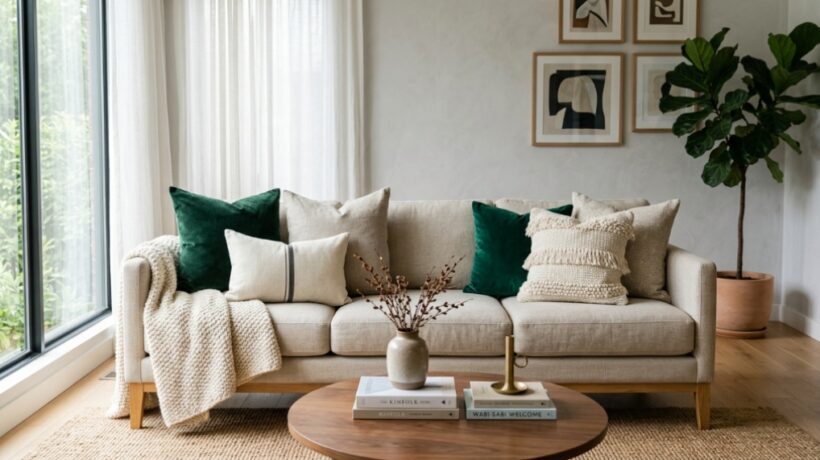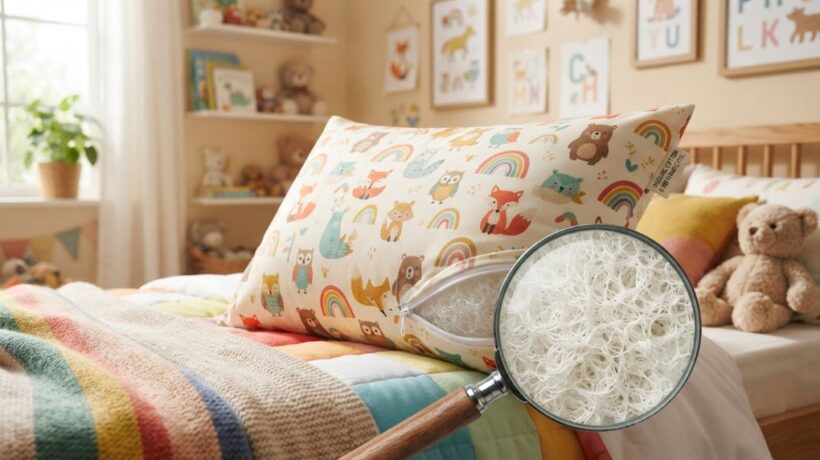





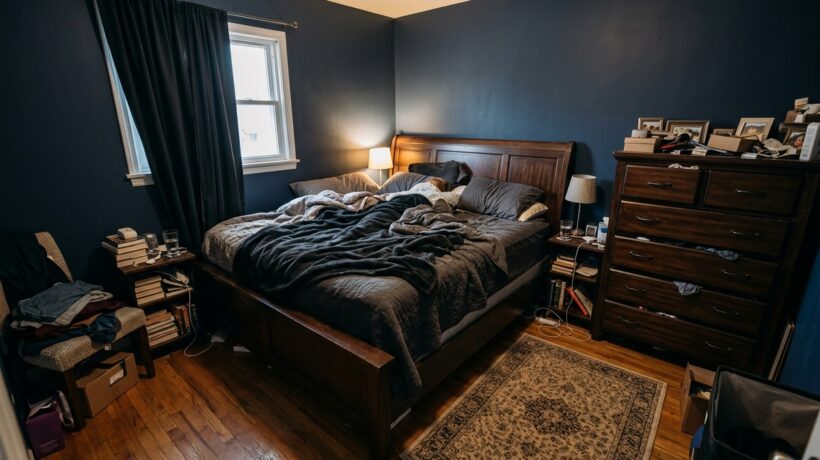
You painted the walls, bought a new duvet, and rearranged the furniture — yet the room still feels cramped. Often, the culprit isn’t the size of the bedroom or the color palette. It’s a series of small makeover decisions that quietly shrink the space. One of the most overlooked is bedding proportions: many people upgrade to a larger pillow without checking what are the measurements of a queen size pillow, then wonder why the bed looks bulky and the room feels tighter. The good news is that most shrinking mistakes are easy to identify and just as easy to fix once you know what to look for.
Quick Answer
The biggest bedroom makeover mistakes that make a room feel smaller are: placing large furniture against every wall, choosing oversized bedding and pillows for the bed frame, using dark or busy wall colors, blocking natural light with heavy curtains, hanging art too high, and filling every surface with clutter. Each mistake reduces visual breathing room. Fixing even two or three of them usually makes a bedroom feel noticeably more open without any structural changes.
Key Takeaways
- Oversized bedding, including pillows that don’t match the mattress width, visually crowds a bed and shrinks the room around it.
- Pushing furniture against every wall removes negative space, which the eye needs to perceive openness.
- Heavy or dark curtains block the light that makes small rooms read as larger.
- Scale matters more than color alone: a correctly sized rug, artwork, and pillows can make or break the sense of space.
- Most shrinking mistakes are reversible and inexpensive to correct.
Why a Makeover Can Accidentally Shrink a Bedroom
A bedroom makeover usually adds things: new bedding, a bigger headboard, extra pillows, a rug, wall art, maybe a bench at the foot of the bed. Each addition is fine on its own. Together, they consume the empty space that made the room feel airy in the first place.
The human eye judges room size partly by how much uninterrupted floor, wall, and surface area it can see. When every surface is occupied, the brain registers “full” rather than “spacious.” That’s why a well-decorated but crowded room can feel smaller than a minimally furnished one of the same dimensions.
The most common trigger is a bedding upgrade. People buy a thicker duvet, add a bed skirt, layer three or four pillows, and top it with a chunky throw. None of these items is wrong, but the combined volume can swallow a small bedroom. Checking the actual dimensions of your mattress and pillows before buying is the simplest way to avoid this, since standard sizes vary more than most shoppers expect.
Mistake 1: Oversized Bedding and Wrong-Sized Pillows
Bedding that’s too large for the bed frame is one of the fastest ways to make a bedroom feel cramped. An oversized duvet that drapes to the floor hides the legs of the bed, reduces visible floor space, and makes the bed itself look like it’s taking up more of the room than it actually is.
Pillows create the same effect. A standard queen mattress is 60 inches wide, and a correctly sized pillow should span roughly one-third to one-half of that width when placed flat. Stacking pillows that are too tall or too wide makes the head of the bed look bulky and pushes the visual weight of the room toward one wall.
How pillow size affects perceived space
Pillows that are proportionally matched to the bed keep the sleeping area visually contained. Oversized pillows, by contrast, spill past the mattress edges and blur the boundary between the bed and the rest of the room. That blurring is what makes the space feel tighter — the eye can no longer clearly separate one zone from another.
If you’re layering pillows for a hotel-style look, use the largest pillows at the back and progressively smaller ones in front. This creates a tiered shape instead of a solid block, which reads as more refined and less bulky.
Mistake 2: Pushing Furniture Against Every Wall
New decorators often assume that pushing all furniture flat against the walls maximizes floor space. In practice, it does the opposite. A room lined with furniture on all four sides has no visible negative space, and negative space is what the eye uses to judge openness.
In small bedrooms, pulling the bed slightly away from the wall, leaving a gap between the nightstand and the corner, or floating a dresser a few inches from the wall can create the impression of depth. You don’t need a large room for this — even a few inches of breathing room around key pieces helps.
There’s a practical trade-off: floating furniture uses more floor area and can complicate traffic flow. In very tight rooms, keep at least one wall completely clear instead. A single empty wall often does more for perceived space than any decorating decision.
Mistake 3: Dark Walls and Low-Contrast Color Schemes
Dark walls absorb light and visually pull inward, which can make a small bedroom feel like a box. That doesn’t mean dark colors are always wrong — a deep accent wall behind the bed can add depth when the other three walls are light. The mistake is using dark tones on all four walls in a room with limited natural light.
Low-contrast schemes cause a different problem. When the walls, bedding, curtains, and rug are all similar mid-tone colors, there’s nothing for the eye to anchor on. The room reads as a flat, undefined space, which often feels smaller than a room with clear light-and-dark structure.
A practical approach: keep walls light, introduce one darker element (a headboard, an accent wall, or a piece of art), and let the bedding provide a mid-tone bridge. This gives the room depth without shrinking it.
Mistake 4: Blocking Natural Light
Light is the single most powerful tool for making a small bedroom feel larger. Heavy blackout curtains, valances, and furniture placed directly in front of windows all reduce the amount of daylight entering the room, and with it, the sense of space.
If you need blackout coverage for sleep, consider layered window treatments: sheer panels for daytime and blackout curtains that stack tightly to the sides at night. Mounting the curtain rod well above the window frame and extending it past both sides also makes windows appear larger, which in turn makes the room feel larger.
Mirrors are a useful supplement. A mirror placed opposite a window bounces daylight deeper into the room, effectively doubling the visible light source without any structural change.
Mistake 5: Decorating at the Wrong Scale
Scale is the most common hidden cause of a room feeling small. A tiny rug floating in the middle of the floor chops the space into fragments. A large rug that extends under the bed and out to the sides unifies the room and makes it feel wider.
The same principle applies to art and lighting. One large piece of artwork reads as more spacious than a cluster of small framed prints. A single well-proportioned pendant or floor lamp does more for openness than four small table lamps scattered around.
| Element | Makes a Room Feel Smaller | Makes a Room Feel Larger |
|---|---|---|
| Rug | Small, floating in the center | Large, extending under the bed |
| Artwork | Many small frames clustered | One large statement piece |
| Pillows | Oversized or too many layers | Proportionate to bed width, tiered |
| Curtains | Short, narrow, heavy fabric | Floor-length, extended past window |
| Furniture placement | Tight against every wall | At least one clear wall or small gaps |
Mistake 6: Clutter on Every Surface
Every object on a nightstand, dresser, or shelf competes for visual attention. When surfaces are completely covered, the eye has nowhere to rest, and the room feels dense rather than open. The fix isn’t minimalism for its own sake — it’s intentional grouping.
Choose a small number of items per surface and give them space. A single lamp, a book, and a small plant on a nightstand leave more visual breathing room than a stack of magazines, three candles, and a phone charger. The same logic applies to walls and floors: fewer, better-spaced objects always read as more spacious than many crowded ones.
How to Fix These Mistakes Without Starting Over
- Measure your mattress, then compare it against your pillow and duvet sizes before buying anything new.
- Remove one item from every surface and one piece of furniture from the room, then live with the change for a week.
- Lighten the heaviest wall color by one shade, or keep three walls light and create a single accent.
- Swap heavy curtains for layered sheers and blackout panels that stack to the sides.
- Replace clusters of small decor with one or two appropriately sized pieces.
Most of these changes cost little or nothing. The goal isn’t to strip the room down to bare walls — it’s to make sure every object you keep is doing useful visual work instead of crowding the space.
Frequently Asked Questions
Does a bigger bed make a bedroom look smaller?
A larger bed does occupy more floor space, but it can still work in a small room if the surrounding furniture is minimal and the bedding is proportionate. The real problem is usually oversized bedding and too many pillows, not the mattress itself.
What color makes a small bedroom look bigger?
Light, cool neutrals such as soft white, pale gray, and muted blues tend to reflect more light and make walls feel farther apart. Dark colors can work as a single accent, but using them on all four walls in a low-light room usually makes the space feel tighter.
Should pillows match the width of the bed?
Pillows should be proportionate to the mattress, not wider than it. A pillow that extends past the edges of the bed disrupts the visual boundary between the bed and the room, which can make the space feel crowded.
Is it better to have one large rug or several small ones in a bedroom?
One large rug generally makes a bedroom feel bigger because it unifies the space. Multiple small rugs fragment the floor visually and can make the room feel chopped into sections.
Do mirrors really make a bedroom look bigger?
Yes, when placed correctly. A mirror opposite a window reflects daylight deeper into the room and adds a sense of depth. A mirror facing a blank wall or a dark corner has much less effect.
How many pillows should be on a bed in a small bedroom?
Two to four pillows is usually enough for a small bedroom. Using fewer, well-proportioned pillows keeps the bed looking tidy and prevents the head of the bed from dominating the room visually.
Conclusion
Making a bedroom feel larger rarely requires renovation. It requires correcting scale and proportion — and the most common offenders are oversized bedding, wrong-sized pillows, furniture pushed against every wall, heavy window treatments, and clutter on every surface. Start with the bed itself: confirm your mattress and pillow dimensions, then simplify the layers around it. From there, open up one wall, lighten the curtains, and reduce surface clutter. These small adjustments compound quickly, and most people notice a real difference within a single afternoon of rearranging.