Getting quality sleep depends heavily on having the right pillow for your sleeping position. If you sleep on your back, your pillow choice directly affects your spinal alignment, breathing quality, and overall comfort throughout the night. The wrong pillow can lead to neck pain, headaches, and poor posture that carries into your waking hours.
Many people struggle with chronic neck and shoulder pain simply because their pillow doesn’t support their natural spine curvature. Back sleepers face unique challenges compared to side or stomach sleepers. Your head, neck, and spine need to maintain proper alignment while lying flat, which requires specific pillow characteristics.
This comprehensive guide will help you understand exactly what to look for when choosing a pillow as a back sleeper. You’ll learn about height requirements, firmness levels, materials, and features that make the difference between restful sleep and waking up stiff and sore. By understanding these factors, you can make an informed decision that improves both your sleep quality and your posture.
Understanding Your Spine’s Natural Alignment
Before diving into pillow selection, it’s essential to understand how your spine should align during sleep. Your spine has natural curves that need support in all positions, including when lying on your back.
The cervical spine, or neck region, curves slightly inward toward the front of your body. This curve needs to be maintained during sleep to prevent muscle strain and maintain healthy posture. When lying on your back, your pillow should fill the gap between your neck and the mattress without pushing your head too far forward or letting it tilt backward.
Your head should rest at a relatively neutral angle. Imagine a straight line running from your ears through your shoulders down to your hips. This alignment keeps your airways open, reduces pressure on muscles and joints, and allows your body to fully relax during sleep.
Poor alignment during sleep forces your neck muscles to work overtime trying to support your head. Over eight hours, this constant tension leads to stiffness, pain, and gradual postural changes. Therefore, selecting a pillow that maintains proper alignment is crucial for both immediate comfort and long-term health.
The Importance of Pillow Loft Height
Pillow loft height refers to how tall or thick a pillow is when you lay your head on it. This measurement is perhaps the most critical factor for back sleepers because it directly determines whether your neck maintains its natural curve.
For back sleepers, the ideal pillow loft height typically ranges from three to five inches when compressed under the weight of your head. This range supports most people’s neck curve without tilting the head too far in any direction. However, your individual needs may vary based on your body proportions and mattress firmness.
A pillow that’s too high pushes your head forward, creating a chin-to-chest position that strains neck muscles and can restrict breathing. You might notice snoring or sleep apnea symptoms worsening with an overly tall pillow. Additionally, this forward head position can contribute to the development of a forward head posture during waking hours.
Conversely, a pillow that’s too low fails to support your neck’s natural curve. Your head tilts backward, hyperextending the neck and creating different strain patterns. This position also leaves a gap between your neck and the pillow, offering no support to the cervical spine.
Finding the right height involves considering your shoulder width and mattress firmness. People with broader shoulders or softer mattresses often need slightly taller pillows to maintain alignment. Those with narrower builds or firmer mattresses typically need lower profiles.
Why Medium Firmness Pillow Works Best
The firmness of your pillow affects how well it maintains its supportive height throughout the night. A medium firmness pillow strikes the ideal balance between support and comfort for most back sleepers.
Medium firmness provides enough resistance to keep your head elevated at the proper height while still contouring gently to your neck’s curve. This combination prevents the pillow from collapsing completely under your head’s weight, which would eliminate the support you need.
Pillows that are too soft feel comfortable initially but compress too much during the night. As they flatten, your head sinks lower, disrupting your spine alignment. You might find yourself frequently adjusting your pillow or waking with neck stiffness despite the pillow feeling soft and inviting.
On the other hand, pillows that are too firm don’t conform to your neck’s natural shape. They create pressure points and gaps that leave parts of your neck unsupported. The rigidity prevents the pillow from cradling your head properly, leading to discomfort and muscle tension.
Medium firmness adapts to your unique contours while maintaining structural integrity. It provides consistent support throughout the night without requiring constant adjustment. This stability allows your muscles to fully relax, knowing your spine will remain properly aligned.
Material Options and Their Characteristics
Different pillow materials offer varying levels of support, durability, and comfort. Understanding these options helps you choose a pillow that meets your specific needs and preferences.
Memory foam pillows conform to your head and neck shape while providing substantial support. They respond to body heat, becoming softer where you’re warmest. Traditional memory foam can retain heat, though many modern versions include cooling technologies. These pillows work exceptionally well for back sleepers who need consistent support.
Latex pillows offer responsive support that bounces back quickly. They’re naturally cooler than memory foam and resist dust mites and mold. Latex provides a slightly springier feel while still maintaining good support for back sleepers. Additionally, they’re highly durable and maintain their shape for years.
Down and feather pillows provide a soft, luxurious feel that many people love. However, they compress significantly and require frequent fluffing to maintain adequate height. While comfortable, they may not provide the consistent support back sleepers need for proper alignment.
Polyester fill pillows are affordable and widely available. Quality varies dramatically with these pillows. Higher-end polyester fills can provide decent support, but budget options often flatten quickly and need replacement within a year.
Buckwheat pillows contain natural hulls that shift to conform to your shape. They’re adjustable, as you can add or remove hulls to change the height. They stay cool and provide firm support. However, they make noise when you move and feel quite different from traditional pillows.
Hybrid pillows combine materials to balance different properties. For example, a pillow might have a memory foam core for support with a softer down alternative covering for comfort. These designs attempt to provide the best of multiple materials.
Adjustability and Customization Features
The ability to customize your pillow height and firmness can be invaluable for achieving perfect alignment. Many modern pillows include features that let you adjust them to your specific needs.
Removable inserts or layers allow you to increase or decrease the pillow’s height. You might start with all layers included and remove one if the pillow feels too high. This adjustability lets you fine-tune the support as your needs change or as the pillow materials settle.
Zippered covers with adjustable fill work similarly. You can add or remove filling material to achieve your ideal height and firmness. This feature is particularly useful if you’re between standard sizes or if your needs change seasonally.
Contoured designs with different zones provide varying support levels across the pillow surface. Some have a depression in the center for your head and raised edges to support your neck. These designs can work well for back sleepers, though they may limit your ability to change positions during sleep.
Inflatable inserts or chambers let you adjust firmness by adding or releasing air. This technology provides precise control over the pillow’s feel. However, these pillows require more maintenance and may develop leaks over time.
Testing adjustable features before committing helps you determine if they genuinely improve your comfort or add unnecessary complexity. Some people appreciate the customization, while others prefer the simplicity of a pillow that works right out of the package.
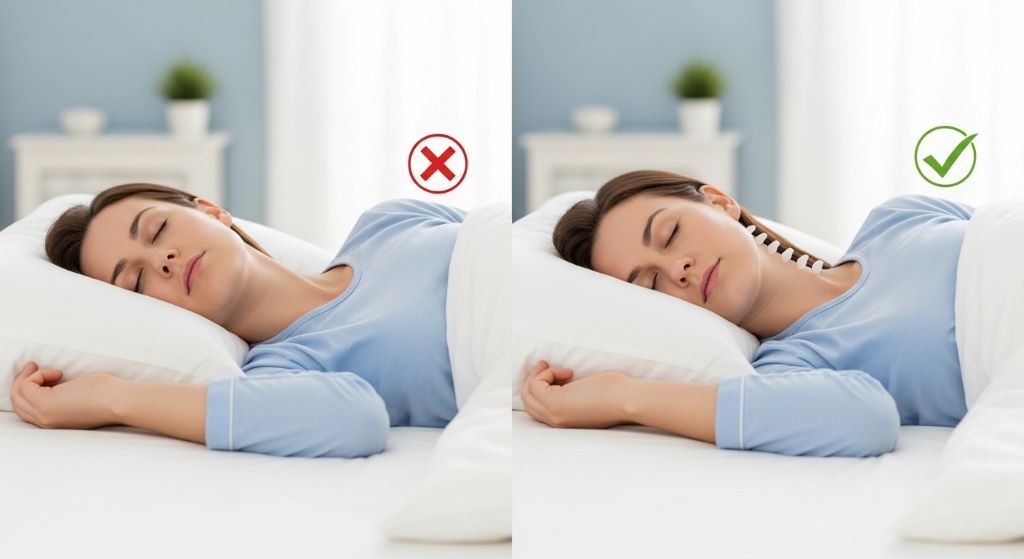
Evaluating Pillow Support for Your Neck Curve
Your neck’s specific curvature influences which pillow will work best for you. While general guidelines help narrow your options, individual testing ensures you find the perfect match.
The cervical roll or neck support area of a pillow should fill the space between your neck and the mattress. When lying on your back, slide your hand under your neck. If there’s a significant gap, your pillow isn’t providing adequate support. If you can barely fit your fingers through, the support is likely appropriate.
Your head should rest slightly lower than your neck support. Many specialized pillows for back sleepers feature a higher area under the neck and a shallower depression for the head. This design maintains the natural cervical curve effectively.
Check your chin position while lying on the pillow. Your chin should be roughly level or very slightly tilted toward your chest, not pointing upward. An upward chin angle indicates the pillow is too low, while a pronounced chin-to-chest angle means it’s too high.
Your ears should align with your shoulders when viewed from the side. Have someone take a photo of you lying on your potential pillow, or use a mirror positioned alongside your bed. This visual check reveals alignment issues you might not feel immediately.
Pay attention to how your muscles feel after lying on the pillow for several minutes. You should feel relaxed, not like your neck muscles are working to hold your head in position. Tension during this test indicates the pillow isn’t providing proper support.
Additional Features That Enhance Sleep Quality
Beyond basic support, several features can improve your overall sleep experience and contribute to better posture maintenance throughout the night.
Cooling technologies help regulate temperature, which affects sleep quality. Gel-infused foams, ventilated designs, or breathable covers prevent heat buildup that can disrupt sleep. Maintaining a comfortable temperature helps you sleep more soundly without repositioning frequently.
Hypoallergenic materials protect against dust mites, mold, and allergens. If you have sensitivities, look for pillows made from naturally resistant materials or those with antimicrobial treatments. Allergic reactions can cause poor sleep and lead to position changes that compromise your alignment.
Washable covers make pillow maintenance easier. The ability to remove and clean the cover regularly keeps your sleeping environment fresh and hygienic. Some entire pillows are machine washable, though this is less common in supportive models.
Odor resistance matters, especially with foam pillows that can retain smells. Quality pillows use materials that don’t off-gas unpleasant chemical odors or absorb smells over time. CertiPUR-US certification indicates foams meet specific safety and emission standards.
Edge support helps your pillow maintain its shape even when your head isn’t centered. Reinforced edges prevent the pillow from flattening at the sides, ensuring consistent support regardless of where your head rests.
Transitioning to a New Pillow
Switching to a new pillow requires an adjustment period. Your neck and shoulders have adapted to your old pillow’s support pattern, even if it wasn’t ideal. Give yourself time to acclimate to the new support.
Expect one to two weeks of adjustment as your muscles learn to relax in the new position. You might experience mild soreness or stiffness initially, particularly if your old pillow was significantly different in height or firmness. This temporary discomfort doesn’t necessarily mean the new pillow is wrong for you.
Use your new pillow consistently during this trial period. Switching back and forth between old and new prevents your body from fully adapting. Commit to the new pillow exclusively for at least a week before making judgments.
Monitor specific symptoms rather than general feelings. Note whether you wake with less neck pain, whether headaches decrease, or whether you sleep through the night more consistently. These objective measures provide better feedback than simply whether the pillow feels different.
Keep receipts and respect trial periods offered by manufacturers. Many pillow companies offer 30 to 90-day trial periods, recognizing that finding the right pillow takes time. Take advantage of these policies to ensure you’ve found your ideal match.
Common Mistakes Back Sleepers Make
Understanding what doesn’t work helps you avoid wasting money on unsuitable pillows. Many back sleepers make predictable mistakes that compromise their sleep quality and posture.
Using pillows designed for side sleepers is perhaps the most common error. Side sleeper pillows are much taller to fill the gap between the shoulder and head. When used by back sleepers, they push the head too far forward, creating significant alignment problems.
Stacking multiple pillows seems logical if one feels too low, but this approach rarely works well. Multiple pillows shift and separate during the night, creating inconsistent support. Additionally, the combined height is usually too much for proper back sleeping alignment.
Keeping pillows long past their useful life saves money initially but costs you in poor sleep quality. Most pillows need replacement every one to three years, depending on materials and quality. Once a pillow has lost its support, it actively harms your posture.
Ignoring the relationship between your mattress and pillow leads to mismatched support. A soft mattress allows your body to sink more, potentially requiring a lower pillow. A firm mattress keeps you more elevated, possibly needing a slightly taller pillow. These components work together, not independently.
Choosing based solely on price often results in disappointment. While expensive doesn’t always mean better, extremely cheap pillows typically lack the materials and construction needed for adequate support. Consider pillows an investment in your health rather than a commodity purchase.
Testing Pillows Before Buying
Whenever possible, test pillows before committing to a purchase. While online shopping offers convenience, actually lying on a pillow provides invaluable information.
Visit stores that allow you to test pillows on display mattresses. Spend at least five minutes lying on each pillow you’re considering. This duration lets your body relax somewhat and gives you a better sense of the support quality.
Bring your own pillowcase if hygiene concerns you. Many stores provide protective covers, but using your own ensures comfort during testing. Focus on how your neck feels rather than the pillow’s aesthetic appeal or brand reputation.
Ask about return policies even when buying in-store. Some retailers allow returns or exchanges within a specific timeframe if the pillow doesn’t work out. Understanding these policies before purchase reduces risk.
For online purchases, prioritize companies offering trial periods and easy returns. Read the fine print about condition requirements and return shipping costs. Some companies offer risk-free trials with prepaid return shipping, making online pillow shopping much safer.
Read reviews from verified purchasers, specifically looking for feedback from back sleepers. Pay attention to comments about durability, height accuracy, and whether the pillow maintains its support over time. Multiple mentions of the same issue across reviews likely indicate a real problem.
Maintaining Your Pillow for Longevity
Proper care extends your pillow’s useful life and ensures it continues providing adequate support. Different materials require different maintenance approaches.
Follow manufacturer cleaning instructions carefully. Most pillows have specific care requirements based on their materials. Memory foam, for instance, should never go in a washing machine, while some polyester-fill pillows are machine washable.
Use pillow protectors under your pillowcase. These barriers prevent oils, sweat, and dead skin from penetrating the pillow itself. They’re easy to wash frequently and significantly extend the pillow’s lifespan.
Fluff and rotate pillows regularly to distribute wear evenly. Even supportive pillows benefit from occasional fluffing to maintain their structure. Rotation prevents body impressions from forming in one spot.
Air out your pillow monthly by removing it from cases and letting it breathe. This practice reduces moisture buildup that can lead to mold or odor. Place pillows in indirect sunlight or a well-ventilated area for a few hours.
Replace pillows when they fail the fold test. Fold your pillow in half and release it. A pillow with adequate support should spring back immediately. If it stays folded or returns slowly, the materials have broken down and need replacement.
Special Considerations for Specific Needs
Certain situations require additional thought when selecting a pillow for back sleeping. These special circumstances might influence which features matter most.
Chronic pain sufferers often benefit from contoured pillows designed specifically for neck pain relief. These pillows provide targeted support to the cervical spine and may help reduce pain symptoms. Consult with a healthcare provider about specific recommendations for your condition.
Snorers and sleep apnea patients need to be particularly careful about pillow height. A pillow that’s too high can worsen these conditions by restricting airways. Some pillows are specifically designed to reduce snoring by optimizing head and neck positioning.
Hot sleepers should prioritize cooling features over other considerations. Temperature regulation can make the difference between restful sleep and constant repositioning. Look for gel infusions, breathable covers, and ventilated designs.
Allergy sufferers must focus on hypoallergenic materials and washability. Being able to clean your pillow and pillowcase frequently reduces allergen exposure. Natural materials like latex resist dust mites better than many synthetic options.
People who change positions during sleep might need a pillow that works for multiple sleeping positions. While this guide focuses on back sleeping, consider whether you stay on your back all night or shift to your side occasionally. Versatile pillows can accommodate these changes.
Conclusion
Selecting the right pillow as a back sleeper significantly impacts your sleep quality and posture. The key factors to consider include pillow loft height, which should keep your head aligned with your spine, and a medium firmness pillow that provides support while contouring to your neck’s natural curve.
Understanding your body’s specific needs helps narrow down the many options available. Consider your shoulder width, mattress firmness, and any special circumstances like chronic pain or temperature sensitivity. Materials, adjustability features, and additional technologies like cooling can enhance your sleep experience beyond basic support.
Remember that finding the perfect pillow often requires some trial and error. Take advantage of trial periods, test pillows when possible, and give yourself time to adjust to new support patterns. The investment in a quality pillow pays dividends through better sleep, reduced pain, and improved posture.
Maintain your pillow properly to extend its useful life, but don’t hesitate to replace it when support diminishes. Your pillow is a crucial component of your sleep environment, deserving the same attention you give to your mattress. With the right pillow supporting your neck and head, you’ll wake feeling refreshed and ready to face each day without the burden of neck pain or stiffness.
Frequently Asked Questions
How do I know if my pillow is the right height for back sleeping?
The right pillow height keeps your head aligned with your spine when lying on your back. Your chin should be roughly level, not pointing up or pressed toward your chest. Additionally, there should be minimal gap between your neck and the pillow. If you can slide your entire hand easily under your neck while lying down, your pillow is likely too low. Conversely, if you feel your chin pushing toward your chest, it’s too high.
Can I use the same pillow if I sleep on my back and side?
While some versatile pillows work for multiple positions, most pillows are optimized for one sleeping position. Back sleepers need lower pillows than side sleepers. If you change positions throughout the night, look for a medium-height pillow with good support that can accommodate both positions reasonably well. Alternatively, consider keeping two different pillows and using whichever matches your current position.
How often should I replace my pillow?
Most pillows should be replaced every one to three years, depending on the material and quality. Memory foam and latex pillows typically last longer than down or polyester-fill options. Replace your pillow when it no longer springs back after folding, develops lumps, or when you wake with neck pain despite previously sleeping well. If you find yourself constantly adjusting your pillow throughout the night, it’s probably time for a replacement.
Will a new pillow fix my neck pain immediately?
A proper pillow can significantly reduce neck pain, but improvement isn’t always immediate. Your muscles and joints need time to adjust to the new support. Give yourself one to two weeks to adapt to a new pillow. If pain persists or worsens after this adjustment period, the pillow might not be right for you, or your neck pain may require professional medical evaluation beyond pillow changes.
Do I need an expensive pillow to get good support?
Price doesn’t always correlate directly with quality, but very cheap pillows often lack the materials and construction needed for adequate support. Mid-range pillows typically offer the best value, providing quality materials and good support without premium pricing. Focus on features that matter for back sleepers rather than brand names. A well-designed pillow at a moderate price point often performs better than a luxury pillow not designed for your sleeping position.
Related Topics:
How to Get Ready for Your First CoolSculpting Session
How to Reverse Tech Neck Posture: A Guide to Better Alignment