Key Takeaways
- Grocery stores are integrating advanced technologies to elevate food service operations.
- Innovations like AI-powered platforms, autonomous retail spaces, and enhanced ordering solutions are leading the way.
- These advancements help reduce waste, boost efficiency, and deliver improved customer experiences in-store.
In today’s fast-paced world, grocery stores are evolving beyond traditional retail spaces to become comprehensive food service hubs. This transformation is fueled by breakthrough solutions that prioritize customer satisfaction, operational efficiency, and the demand for both convenience and quality. As retailers look for ways to set themselves apart, the adoption of advanced technology and improved store amenities, such as hot food displays, is changing the way shoppers purchase and consume fresh food on site.
By blurring the lines between grocery and food service, supermarkets can deliver the speed and quality expected by busy consumers, while supporting sustainable practices throughout their operations. Innovations in AI, streamlined ordering systems, and inventory management tools all play critical roles in this transformation. Together, these advances ensure that customers can enjoy hassle-free experiences, fresher food choices, and expanded menu offerings in one convenient location.
AI-Powered Fresh Buying Solutions
Artificial Intelligence is rapidly advancing the capabilities of grocery store food service programs. Companies such as Afresh are delivering AI-driven solutions to optimize the purchasing, forecasting, and merchandising of fresh foods. For example, Wakefern Food Corp. recently adopted Afresh’s Fresh Buying platform to support precise, data-based ordering for its produce and perishable food products. This technology provides insights based on real-time sales, historical trends, and shelf-life data. As a result, stores reduce overstock, limit food spoilage, and ensure customers receive the freshest possible options during their shopping experience.
Furthermore, predictive analytics powered by AI gives supermarkets the confidence to expand their fresh offerings without the risk of excessive shrinkage. Managers can use intuitive dashboards and automated alerts to make informed decisions on reorder points, pricing strategies, and merchandising displays in real time. These tools facilitate a highly adaptable approach to inventory that aligns with consumer seasonality, allowing for quick pivots in response to emerging food trends, special events, or local preferences. This agility is instrumental in ensuring that high-quality, in-demand items are always available, building greater customer trust and loyalty.
Autonomous Grocery Stores
The rise of autonomous grocery stores is creating a new standard for convenience retail environments. By integrating AI-powered cameras and sensors, these stores let customers enter, shop, and exit without waiting in checkout lines. Sodexo’s partnership with AiFi, rolled out as eat>NOW on university campuses, demonstrates how contactless, frictionless shopping models can dramatically improve customer throughput and convenience. This approach is gaining popularity, especially in high-traffic, time-sensitive environments such as universities, airports, and office buildings.
Beyond reducing lines, autonomous stores are equipped with 24/7 availability, which increases consumer access and convenience. These innovative retail configurations support diverse shopping habits, catering to those who seek late-night snacks, early-morning breakfasts, or quick lunchtime solutions. Moreover, the data collected through autonomous store systems provides insightful analytics into consumer behavior, allowing retailers to further personalize offers, promotions, and inventory selections. By constantly refining the customer journey and monitoring product performance, these smart stores are positioned to anticipate evolving needs and exceed customer expectations on a consistent basis.
Enhanced In-Store Ordering Systems
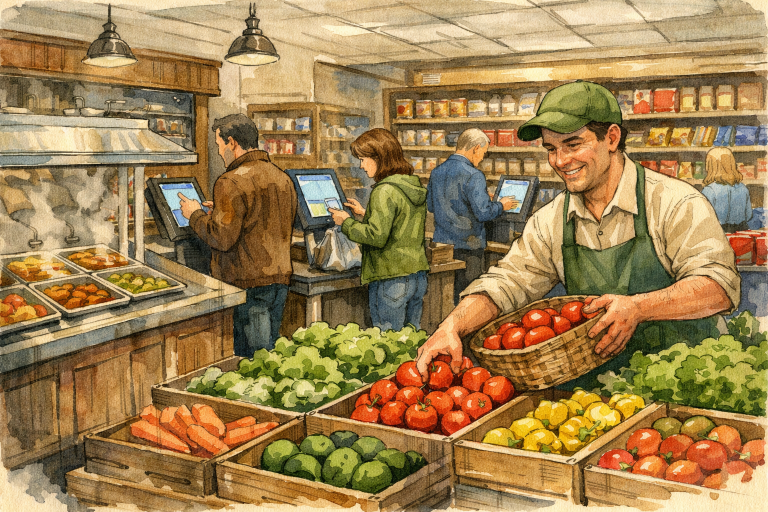
Prepared foods and grab-and-go meals are vital for attracting today’s on-the-move consumers. In response, grocery stores are modernizing in-store ordering platforms to deliver faster, more accurate, and more convenient service. Instacart’s FoodStorm software, for instance, equips store associates with digital tools to streamline production, fulfill online and in-person orders, and deliver a seamless omnichannel customer journey. At deli counters and food service stations, these systems enhance efficiencies by tracking real-time inventory and forecasting demand for specific items, which keeps wait times low and satisfaction high.
Increasingly, digital kiosks and mobile app ordering are also gaining traction within the supermarket setting. These platforms allow customers to customize their meals, schedule orders for future pickup, and even pay directly through the system, minimizing wait times and reducing human error. Integration with loyalty programs further incentivizes repeat visitation by providing personalized deals or rewards. As food service in grocery stores becomes more sophisticated, these ordering solutions contribute to a highly interactive, tech-driven shopping environment, redefining what convenience and adaptability mean for modern retail foodservice.
RFID Technology in Fresh Food Management
Minimizing food waste and maintaining product quality is a top priority in modern grocery food service. RFID (Radio-frequency identification) technology addresses these needs by delivering accurate, real-time data on inventory levels and product locations. Walmart’s adoption of RFID tags across its fresh categories, via a partnership with Avery Dennison, allows for unparalleled traceability throughout the supply chain. Detailed item-level data streamlines replenishment, reduces out-of-stocks, and ensures better inventory rotation, leading to less waste and fresher offerings for consumers. Additional background on the impact and scalability of RFID innovations can be found by reviewing coverage in the Wall Street Journal.
RFID implementation also supports compliance and safety recall efforts, as products can be rapidly traced back to their source or batch, ensuring quicker response times during potential contamination events. For employees, RFID-empowered applications can send instant notifications when products near expiration or require replenishment, transforming inventory checks from manual, labor-intensive tasks into automated, efficient processes. The result is a store environment that maintains fresher displays, optimizes margin, improves regulatory compliance, and most importantly, builds consumer confidence in product quality and safe food handling practices.
Frictionless Checkout Experiences
Few customer experiences frustrate shoppers more than long checkout queues. To address this, retailers are implementing frictionless checkout options that leverage computer vision, digital wallets, and automated charges. The ALDIgo program at select ALDI locations, powered by Grabango technology, illustrates how shoppers can collect their items and walk out without pausing at a register. Digital receipts are generated automatically, making the experience seamless and secure. These frictionless systems not only improve the pace of service but also free up associates to focus on hospitality and customer support, further enhancing the overall in-store atmosphere.
By integrating biometric authentication, mobile payment integration, and real-time transaction tracking, these cutting-edge checkout systems can also offer an extra layer of security and customization. In addition, they provide data that drives continuous improvements in store layouts and product placements. The collected insights allow operators to identify peak shopping hours, popular product pairings, and in-demand meal solutions, which can inform merchandising strategies and promotional campaigns. Ultimately, frictionless checkout points serve as a cornerstone of the next-generation grocery shopping journey, empowering retailers to deliver consistently superior experiences while optimizing backend operations.
Conclusion
The incorporation of next-generation technology into grocery food service formats is transforming stores into lifestyle-oriented destinations. Whether through AI-guided inventory decisions, completely autonomous shopping models, modernized self-serve kiosks, or RFID-enabled stock management, these innovations benefit both consumers and retailers. Ultimately, by embracing digital transformation, grocery stores are better positioned to meet the evolving demands of their communities, reinforcing their indispensable role within the broader food service landscape.
As the future unfolds, expect further developments in personalized nutrition, automated fresh food replenishment, and expanded hot or prepared food offerings integrated seamlessly into the shopping journey. With each advancement, grocers can deepen their community connections by catering to busy families, health-conscious individuals, and the growing population seeking convenient, high-quality meals. Those who invest in continuous innovation will not only thrive in an increasingly competitive environment but will also help shape the direction of the global food retail industry for years to come. The fusion of retail and food service is only poised to grow stronger, welcoming a new era of customer-centric grocery experiences.