Key Takeaways
- Industrial casters significantly enhance mobility and operational efficiency in various facilities.
- Choosing the right caster type and material is crucial for safety, productivity, and floor protection.
- Advancements in caster technology improve ergonomics and reduce maintenance costs.
Introduction
Industrial facilities rely heavily on the seamless transport of equipment and materials. Whether it is moving heavy manufacturing parts or intricate tools, industrial casters form the backbone of efficient operations. These rolling components support carts and machinery, dictating mobility and even playing a key role in workplace safety. The right choice directly impacts productivity and the preservation of flooring, making it an essential focus for facilities managers evaluating material handling solutions. For anyone managing a warehouse or industrial shop, understanding the benefits of heavy duty plate casters and their technological evolution can greatly improve overall facility efficiency.
A poorly selected caster can lead to unexpected delays, equipment failures, and even worker injuries. Evaluating the nuances between caster types and materials is therefore vital for any operation aiming to thrive in a competitive and safety-conscious environment. Modern advances are also shifting the caster landscape, offering maintenance benefits and ergonomic improvements that were unavailable in traditional models.
The drive for greater efficiency in industrial environments has led to specialized caster designs tailored to unique challenges. Whether the focus is reduced push resistance, quieter operations, or longevity under harsh conditions, facilities have more choices than ever before to better align each caster’s performance with daily operational requirements.
Prioritizing the right casters means thinking beyond mere mobility. It covers areas such as injury prevention and cost management, while supporting changes in workflow practices. As more organizations modernize their infrastructure, investing in quality casters is a decision that brings long-term dividends.
Types of Industrial Casters
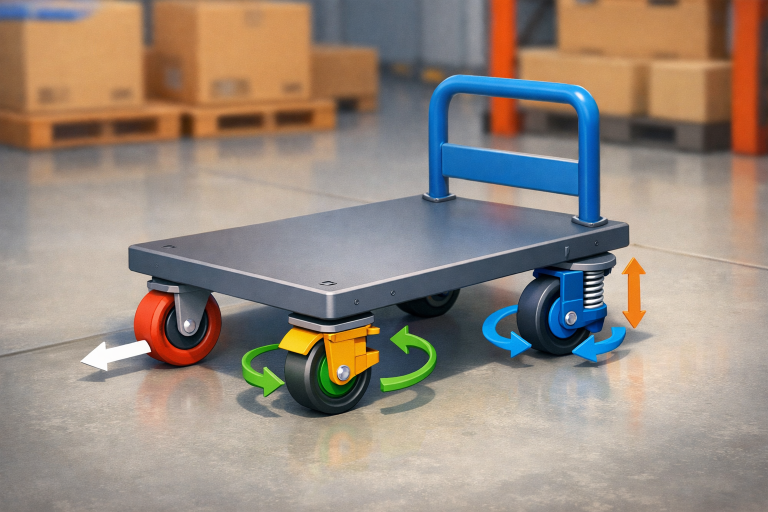
Industrial casters come in several key types, each adapted for specific applications and operational needs:
- Rigid Casters: These have fixed wheels and facilitate straight-line movement. They are ideal for applications requiring predictable paths, such as production line transport or long runway distances.
- Swivel Casters: Swivel designs allow the wheels to rotate 360 degrees, giving operators far greater maneuverability in tight spaces. They are often used on carts that must navigate around obstacles or within congested work areas.
- Locking Casters: These feature braking mechanisms that securely hold equipment precisely where needed. Locking casters are critical for safety when working on inclines or with sensitive materials.
- Spring-Loaded Casters: Designed to absorb impacts and dampen shocks, these casters are frequently used for moving delicate or valuable goods. They reduce vibrations, resulting in quieter and safer operation.
Material Selection for Optimal Performance
The composition of caster wheels is just as important as the type. Choosing the appropriate material determines not only performance but also the longevity and safety of your assets:
- Polyurethane Wheels: Known for their robust durability and ability to safeguard floor surfaces, polyurethane casters work well in mixed-use environments that value both resilience and quiet operation.
- Phenolic Resin Wheels: These are built for high-heat conditions, commonly found in bakeries and chemical processing plants. Their toughness also extends to handling heavy loads with minimal deformation.
- Rubber Wheels: Rubber provides a softer, cushioned ride ideal for reducing noise and absorbing minor impacts. Such casters thrive in offices, healthcare environments, and retail spaces.
Using the wrong material can cause severe operational issues. For example, selecting typical rubber wheels for high-temperature ovens will cause premature failure, damaging both floors and transport carts, and frequently interrupting production schedules. Facility managers should assess their environmental demands and product weight to pick the best material, ensuring smooth operations and longevity. More information about selecting the right industrial caster can be found in this Thomasnet resource.
Impact on Ergonomics and Safety
Ergonomics is a prime concern for frequently moved carts or machinery. Inadequate caster quality often requires operators to apply more push force to move heavy loads, increasing the risk of fatigue and musculoskeletal injuries. Upgrading to casters designed for ergonomic performance can lead to smooth gliding even under heavy loads, greatly minimizing operator strain. An actionable example is a pharmaceutical manufacturer that faced persistent worker fatigue due to outdated casters. By transitioning to low-resistance, advanced caster designs, they saw a substantial reduction in staff injuries and a noticeable improvement in day-to-day productivity.
Safety also extends to preventing sudden stops or runaway carts, both of which can cause workplace accidents. Locking features and anti-vibration casters support not only operational accuracy but also peace of mind for those working in busy, high-stakes environments. Studies on workplace ergonomics and safety regularly highlight casters as an opportunity to reduce risk.
Technological Advancements in Caster Design
The caster industry has undergone significant innovation in recent years. Two of the most influential advancements include intelligent casters and air casters:
- Intelligent Casters: With integrated sensors and Internet of Things (IoT) capabilities, these casters can transmit real-time data on usage, load capacity, and wear. Facilities can now predict maintenance needs, preventing breakdowns and reducing downtime.
- Air Casters: These use a thin film of air to virtually float heavy loads, allowing extremely bulky equipment to be moved with minimal effort while preventing floor damage. Air casters are especially valuable in environments where heavy-duty movement occurs on delicate or expensive surfaces.
Innovations like these continue to drive down maintenance costs and extend the useful life of facility equipment.
Case Study: Enhancing Efficiency in Pharmaceutical Manufacturing
At a leading pharmaceutical facility, recurring difficulties with cart movement and worker fatigue prompted management to evaluate their caster installation. The previous casters, not suited to the sterile, demanding needs of the operation, began to deteriorate prematurely, resulting in an unsafe and inefficient workflow. After switching to advanced casters engineered for clean environments and ease of movement, the company recorded a swift productivity uptick, improved worker morale, and a reduction in reported ergonomic complaints.
Conclusion
Industrial casters are vital components that influence efficiency, worker safety, and overall facility costs. By carefully selecting high-quality, well-designed casters and staying informed about the latest technological developments, industrial managers lay the groundwork for safer, more productive operations. Investing in the right caster solutions ultimately preserves infrastructure, enhances worker well-being, and supports the constant evolution of industrial workspaces.