
Key Takeaways
- Successful excavation begins with a complete site review, accurate plans, soil information, and defined work limits.
- Massachusetts projects require Dig Safe planning before excavation, including premarking and timely notice through 811.
- Equipment, haul routes, stockpile areas, and attachments should be suited to the actual site conditions.
- Trench protection, drainage controls, inspections, and grade verification belong in the initial work plan.
- Early coordination reduces the risk of rework between excavation, utilities, foundations, and paving crews.
Excavation is the phase that makes all subsequent construction activities possible, from foundations and utility connections to paving and drainage. On Boston, MA sites, where tight access, nearby buildings, aging infrastructure, and changing weather can complicate earthwork, a clear pre-excavation plan helps prevent avoidable disruption. For property owners and project teams evaluating an excavator Boston MA, Deloury Construction Co offers a relevant example of an established civil construction operation with more than six decades of experience in excavation and total site work across Boston, MA, and the Northeast, including site preparation, underground utilities, roadway work, demolition, recycling, disposal, and environmental remediation.
The goal is not simply to get a machine on site quickly. It is to make sure the work area, utilities, soil conditions, material flow, safety controls, and project schedule are ready before the first bucket enters the ground.
Why Excavation Planning Matters
Rushed excavation can create problems that affect the entire job. A crew may uncover unsuitable soil after a building pad has been started, find that truck access is too limited for efficient hauling, or discover a drainage conflict after utilities are already in place. Each issue can require additional engineering review, material handling, and schedule changes.
Planning makes it easier to sequence clearing, stripping topsoil, rough grading, trenching, foundation excavation, and final grading without repeatedly moving the same material. It also gives the project team time to identify nearby structures, public sidewalks, traffic routes, and areas where vibration, water, or excavation limits need close attention.
Start With a Complete Site Review
Before mobilization, gather the documents and field information that define the site. A current survey and approved site plans should be reviewed alongside geotechnical information, proposed grades, utility plans, permits, and any known environmental requirements.
- Locate existing buildings, pavement, retaining walls, fences, and adjacent structures.
- Review soil classifications, groundwater observations, rock information, and unsuitable-material notes.
- Identify low areas, drainage paths, wetlands, waterways, and temporary water-control needs.
- Map easements, overhead lines, access points, neighboring properties, sidewalks, and traffic patterns.
- Confirm where equipment can enter, turn, load trucks, refuel, and safely stage materials.
Confirm Underground Utilities Before Digging
Utility locating is essential for both small residential work and major commercial earthwork. In Massachusetts, Dig Safe requirements apply broadly to the movement or removal of earth, rock, or materials, including activities such as grading, backfilling, and demolition.
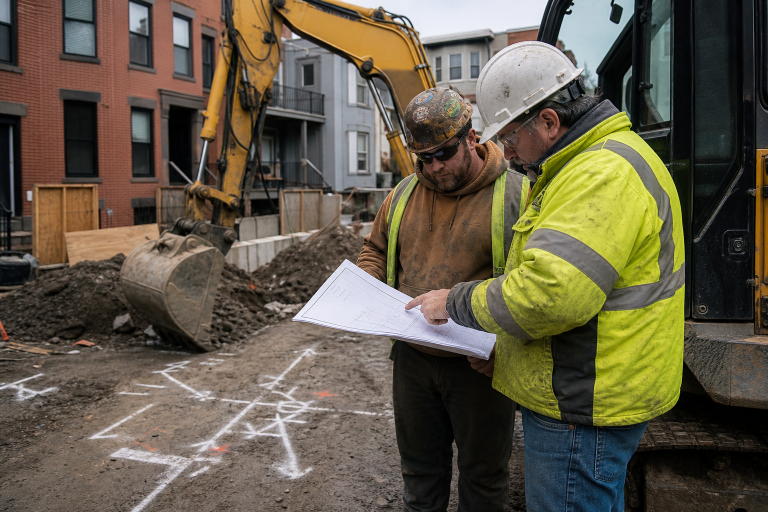
- Define the complete excavation area and premark it with white paint or stakes.
- Submit the Dig Safe request through 811 at least 72 business hours before excavation, excluding weekends and legal holidays.
- Wait until the ticket becomes valid, then confirm that visible markings match the planned work zone.
- Identify private utility lines that may not be marked through the public notification process.
- Use appropriate, careful excavation methods near marked facilities and stop if field conditions conflict with the markings or plans.
Match Equipment and Material Flow to the Job
The biggest machine is not always the most productive choice. Compact excavators can work well in constrained residential areas and around existing buildings. Standard excavators are suited to deeper foundations, utility trenches, and larger cuts. Dozers, graders, loaders, trucks, and attachments such as breakers, compactors, thumbs, and trenching buckets should be selected around the material, depth, reach, and production target.
Material handling deserves the same attention. Estimate what soil will be reused, exported, imported, or tested. Separate clean fill, topsoil, rock, demolition debris, and questionable material. Stockpiles should not block access, interfere with drainage, or create a load hazard near an excavation edge. Defined truck routes and loading locations can reduce congestion and unnecessary equipment movement.
Build Trench Safety Into the Work Plan
Trench safety cannot be treated as a last-minute field decision. OSHA identifies cave-ins, water accumulation, falling loads, nearby traffic, and utility hazards among the conditions that require active planning. Its trenching and excavation safety guidance describes protective approaches such as sloping, benching, shoring, and shielding, which are selected based on site conditions and the work being performed.
- Provide safe entry and exit for workers where required.
- Keep spoil piles, materials, and equipment back from trench edges.
- Arrange for inspections before shifts and after rain or other hazard-increasing events.
- Plan for water diversion, pumping, traffic control, and protection of nearby structures.
- Designate a competent person who can recognize hazards and stop work when conditions change.
Coordinate Grades, Water, and the Project Schedule
Excavation establishes the elevations on which utilities, foundations, pavement, and drainage systems rely. Confirm benchmarks before work begins, use grade stakes or machine-control information as appropriate, and verify cut-and-fill elevations throughout the job. Check trench depth before pipe installation and resolve conflicts before the completed work is covered.
Water management should be planned before major earthwork starts. Temporary swales, pumps, stone access pads, inlet protection, and erosion controls can help manage runoff during wet conditions. The schedule should also identify inspection points for rough grade, underground utilities, building pads, drainage features, and final grading. A late utility trench or missed drainage detail can delay multiple trades.
Questions to Ask Before Hiring an Excavation Contractor
- What excavation, utility, drainage, grading, and disposal services can the contractor perform?
- How will the crew protect adjacent structures, roads, sidewalks, and underground services?
- What equipment, attachments, haul routes, and stockpile locations are proposed?
- Who will manage inspections, changing soil conditions, water, and trench safety?
- How will unsuitable soil, rock, demolition debris, or potentially contaminated material be handled?
- How will the contractor communicate delays, field conflicts, and required plan changes?
Simple Pre-Excavation Checklist
- Review plans, surveys, permits, grades, and available soil information.
- Mark work limits, access routes, staging areas, and stockpile locations.
- Pre-mark the excavation area and obtain a valid Dig Safe ticket.
- Verify utility markings and arrange private locating when needed.
- Confirm equipment, attachments, trucking, drainage, erosion, and traffic controls.
- Set trench protection, access, inspection, and emergency procedures.
- Review the plan with the full field team before excavation starts.
Conclusion
Safe, efficient excavation is planned long before equipment reaches a job site in Boston. A disciplined approach to site review, utility coordination, soil handling, grade control, drainage, and trench safety helps protect workers while keeping the next phases of construction moving forward.