
LED lighting, particularly sleek ceiling panels, has rapidly become the standard in homes, offices, schools, and commercial spaces worldwide. Praised for their energy efficiency, long lifespan, and bright illumination, they seem like the perfect modern lighting solution. However, as these lights become ubiquitous, a growing number of people are asking an uncomfortable question: Could my LED ceiling panels be causing my headaches?
The suspicion often falls on “blue light,” a term that’s gained notoriety primarily due to our screen-saturated lives. While the connection between screens and eye strain is well-documented, the impact of overhead ambient lighting, specifically from LED panels, is a more recent and complex area of concern. This article delves into the science behind blue light, how LED ceiling panels work, the potential link to headaches and related symptoms, and what you can do to mitigate the risks and create a more comfortable visual environment.
Demystifying Blue Light and Modern LED Lighting
Before we explore the headache connection, it’s crucial to understand what blue light is and how LED panels produce it. Visible light comprises a spectrum of colours, each with a different wavelength and energy level. Blue light sits at the shorter-wavelength, higher-energy end of this spectrum, close to ultraviolet (UV) light.
We encounter blue light naturally from the sun – it’s actually what makes the sky appear blue and plays a vital role in regulating our sleep-wake cycles (circadian rhythms) by signaling daytime to our brains. However, we are now exposed to significantly more artificial blue light than ever before from sources like smartphones, computers, televisions, and, increasingly, LED lighting.
Unlike old incandescent bulbs that produced light by heating a filament until it glowed (emitting a broad spectrum with less blue), most “white” LEDs work differently. They typically start with a blue LED chip. This intense blue light then passes through a layer of yellowish phosphor coating. The phosphor absorbs some blue light and re-emits it as yellow and red light. Our eyes perceive this mixture as white light. However, the underlying process means that many standard white LEDs, especially those producing cooler or “daylight” tones, retain a significant spike in the blue portion of their light spectrum (Source 1.2, 2.1, 2.3). This characteristic blue peak is central to the concerns surrounding LED lighting and health.
The Headache Connection: How LED Panels Might Be Triggering Pain
While research is ongoing and individual experiences vary greatly, several mechanisms explain how blue-rich light from LED ceiling panels could contribute to headaches and migraine attacks:
Circadian Rhythm Disruption:
Our bodies rely on natural light cycles to regulate melatonin production, the hormone that signals sleep. Exposure to blue light, especially in the evening, can suppress melatonin production more effectively than other colours (Source 4.1, 4.3). LED ceiling panels, particularly cooler-toned ones used late into the day, can trick the brain into thinking it’s still daytime. This disruption to the circadian rhythm can lead to poor sleep quality, and insufficient or disrupted sleep is a well-known trigger for tension headaches and migraines (Source 2.2).
Eye Strain and Fatigue:
High-energy blue light scatters more easily within the eye than other visible light wavelengths. This scattering can reduce contrast and make it harder for the eyes to focus, potentially leading to symptoms similar to digital eye strain – even from overhead lighting. This can manifest as blurry vision, difficulty focusing, dry or irritated eyes, and, consequently, headaches stemming from the muscular effort involved (Source 1.1, 2.1, 2.2). The intensity of many LED panels can exacerbate this strain.
The Flicker Phenomenon:
While designed to provide steady illumination, many LED lights, especially older or lower-quality ones, can exhibit flicker – a rapid, often imperceptible, fluctuation in light output. This flicker can occur due to the way LEDs are powered or how they achieve dimming (often using Pulse-Width Modulation, or PWM, which rapidly turns the light on and off) (Source 1.3, 5.3). Even if you can’t consciously see it, this high-frequency flicker can be detected by the brain’s visual pathways and can be a potent trigger for headaches, eye strain, dizziness, nausea, and even seizures in susceptible individuals, particularly those with migraine or photosensitivity (Source 1.1, 1.2, 1.3, 5.1, 7.1, 7.2, 7.3). Flicker may even worsen when LEDs are dimmed (Source 1.1, 1.3).
Glare and Brightness:
LED panels are often very bright and can create significant glare, especially if poorly positioned or if the light source itself is directly visible. Discomfort glare forces the eyes to work harder, contributing to strain and headaches (Source 1.1, 1.3, 3.3, 7.1). The intensity itself can be problematic for light-sensitive individuals.
Individual Sensitivity (Photophobia):
It’s crucial to note that not everyone reacts to LED lighting in the same way. People with pre-existing conditions like migraine disorders (who often experience photophobia – a heightened sensitivity to light), post-concussion syndrome, chronic dry eye, or certain neurological conditions are often more susceptible to experiencing adverse effects like headaches from specific light characteristics, including blue light and flicker (Source 1.1, 1.2, 3.3, 7.1). Children’s eyes are also more vulnerable as their crystalline lenses are clearer and filter less blue light than adult eyes (Source 1.2).
More Than Just Headaches: Associated Symptoms
Headaches might be the most prominent complaint, but exposure to problematic LED lighting can trigger a cluster of other symptoms. If you suspect your lighting is an issue, you might also experience:
- Eye pain or discomfort
- Dry, burning, or watery eyes
- Blurred or double vision
- Excessive squinting or blinking
- Difficulty concentrating
- Fatigue or feeling generally unwell
- Dizziness or vertigo
- Nausea
- Increased sensitivity to light in general
- Sleep disturbances
Recognizing these associated symptoms can help pinpoint environmental triggers like lighting (Source 1.1, 1.2, 2.1, 3.3, 7.1).
Not All LEDs Are Created Equal: Understanding the Variations
The good news is that LED technology is diverse and evolving. Choosing the right type of LED ceiling panel can make a significant difference in comfort and potentially reduce the risk of headaches. Key factors to consider include:
Color Temperature (CCT):
Measured in Kelvin (K), CCT describes the perceived warmth or coolness of the light. Lower Kelvin values (2700K-3000K) produce “warm white” light, similar to traditional incandescent bulbs, with a softer, yellowish hue and significantly less blue light content. Higher values (4000K-5000K+) produce “cool white” or “daylight” tones, which appear brighter and bluer. For general eye comfort and minimizing blue light exposure, especially in living areas and bedrooms, warmer CCTs (2700K-3000K) are generally recommended (Source 2.2, 3.3, 5.1, 5.2, 5.3, 6.1). Cooler temperatures might be suitable for task-specific areas but should be used judiciously.
Color Rendering Index (CRI):
CRI measures how accurately a light source reveals the true colours of objects, on a scale of 0-100 (with 100 being natural daylight). LEDs with a high CRI (90 or above) render colours more naturally and vividly. This enhanced clarity can reduce eye strain because your eyes don’t have to work as hard to distinguish details and colours (Source 2.3, 4.1, 5.2, 5.3).
Flicker-Free Technology:
Reputable manufacturers are increasingly producing LEDs designed to minimize or eliminate perceptible and imperceptible flicker. Look for products explicitly marketed as “flicker-free” or “low flicker,” especially if you are sensitive to light or prone to headaches (Source 1.1, 1.3, 5.1, 5.2, 5.3, 7.2). High-quality drivers within the LED fixture are key to stable light output.
Blue Light Reduction Features:
Some newer LED products are specifically designed to reduce the blue light spike inherent in standard LEDs, sometimes using special chip technology or filters (Source 2.1, 2.2, 4.1, 5.2, 5.3). While potentially beneficial, assess these alongside CCT and CRI.
Related: Preventing Shoulder Pain: Lifestyle Changes and Ergonomic Tips for a Pain-Free Life
Finding Relief: Strategies to Minimize LED Headache Triggers
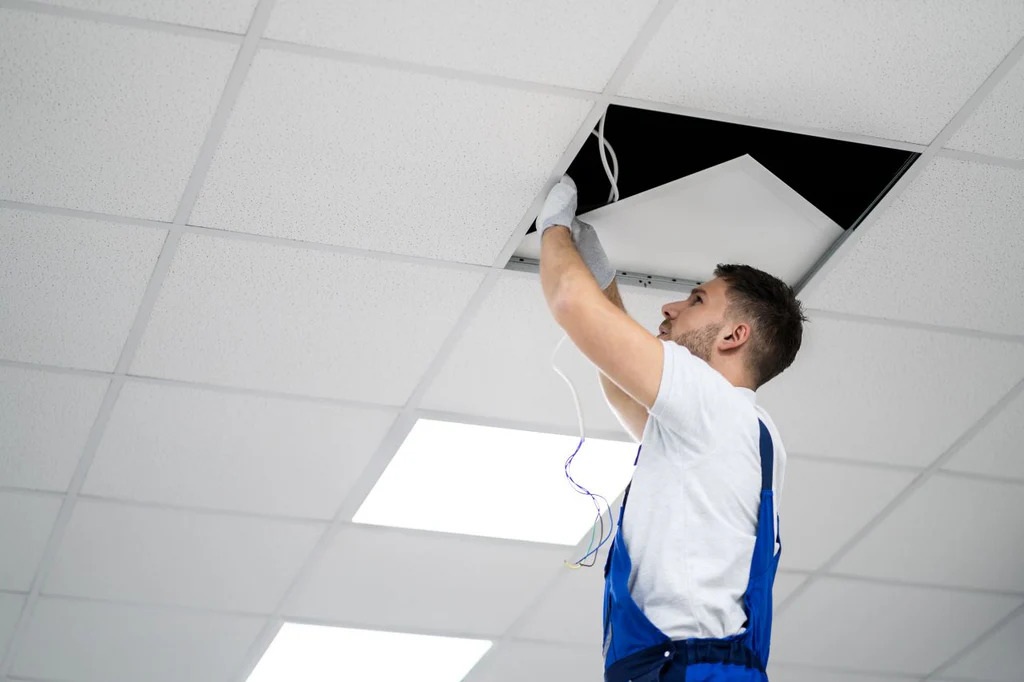
If you suspect LED ceiling panels are contributing to your headaches or eye discomfort, you can take several proactive steps:
-
Choose Wisely:
When installing or replacing LED panels, prioritize those with a warm CCT (2700K-3000K), a high CRI (90+), and flicker-free technology (Source 2.2, 3.3, 5.2, 5.3). Read product specifications carefully.
2. Install Dimmers:
Being able to adjust brightness levels allows you to tailor the light to your needs and comfort. However, ensure you use high-quality, LED-compatible dimmers, as poor dimming can sometimes introduce or worsen flicker (Source 1.1, 1.3, 3.1).
3. Layer Your Lighting:
Avoid relying solely on intense overhead panels. Incorporate multiple light sources like floor lamps, table lamps, and under-cabinet lighting. Use warmer bulbs (including warm CCT LEDs or even incandescent/halogen where feasible) in these fixtures to create softer, more targeted illumination (Source 5.2).
4. Maximize Natural Light:
Whenever possible, harness the benefits of daylight. Position desks and workspaces near windows. Keep blinds open during the day. Natural light exposure helps regulate circadian rhythms (Source 4.1).
5. Take Regular Visual Breaks:
If you spend long hours under LED lighting (like in an office), practice the 20-20-20 rule: every 20 minutes, look away at something at least 20 feet away for 20 seconds. This helps relax your eye muscles (Source 2.1, 2.2, 4.2).
6. Consider Blue Light Filtering Glasses:
While primarily marketed for screen use, glasses with lenses designed to filter blue light (often with a yellow, amber, or red tint) might offer some reduction in strain from ambient LED lighting, though effectiveness varies (Source 1.1, 1.3, 2.2, 4.2). Amber or red tints are generally more effective at blocking blue light needed for melatonin regulation at night.
7. Optimize Screen Habits:
Since screens are another major blue light source, manage your exposure comprehensively. Use built-in night modes or filter apps on devices, reduce screen brightness, and limit screen time, especially 1-2 hours before bed (Source 1.3, 2.2, 4.2, 4.3).
8. Consult Healthcare Professionals:
If you experience persistent headaches, eye strain, or changes in vision, consult an eye doctor (optometrist or ophthalmologist) for a comprehensive eye exam to rule out underlying issues. For frequent or severe headaches or migraines, see your primary care physician or a neurologist (Source 1.1, 2.1).
Related: Weak Core Symptoms: Signs, Solutions, and Strengthening Tips for a Healthier You
People Also Ask (FAQs)
Can LED ceiling lights really cause headaches?
Yes, for some individuals. Factors like the high blue light content (disrupting sleep, causing eye strain), imperceptible flicker, glare, and intensity can trigger headaches or migraines, especially in those with pre-existing sensitivities like photophobia.
Is blue light from ceiling lights harmful?
Excessive exposure to artificial blue light, particularly from cool-toned LEDs and especially at night, is linked to digital eye strain, headaches, and disruption of the circadian rhythm (affecting sleep). While definitive long-term retinal damage from typical home/office LED exposure is still debated, the potential for cumulative stress exists, and minimizing unnecessary exposure is prudent (Source 2.1, 2.2, 2.3).
How do I reduce blue light from my ceiling lights?
Choose LED panels or bulbs with a warmer color temperature (CCT) like 2700K or 3000K. Use dimmers to lower intensity, especially in the evening. Add diffusing covers or shades to soften the light. Layer lighting with lamps using warm bulbs. Look for specialized low-blue-light LED products (Source 3.3, 4.1, 5.3).
What type of ceiling light is best for sensitive eyes?
LEDs that are warm CCT (2700K-3000K), have a high CRI (90+), and feature flicker-free technology are often the most comfortable LED option (Source 5.1, 5.2, 5.3). Some individuals with extreme sensitivity might still prefer the smooth, flicker-free light spectrum of older incandescent or halogen bulbs, despite their lower energy efficiency.
Do warmer LED lights have less blue light?
Yes, significantly. LEDs rated at warmer color temperatures (e.g., 2700K, often described as “soft white” or “warm white”) emit much less high-energy blue light compared to cooler LEDs (e.g., 4000K “cool white” or 5000K+ “daylight”) (Source 1.2, 2.2, 6.1).
Can LED flicker cause health problems?
Yes. Even flicker that is too fast to see consciously can be detected by the nervous system and may trigger symptoms like headaches, migraines, eye strain, fatigue, dizziness, and reduced visual performance in sensitive individuals (Source 1.1, 1.2, 1.3, 7.1, 7.2, 7.3).
Conclusion: Illuminating the Path to Comfort
LED ceiling panels represent a significant advancement in lighting technology, offering undeniable benefits in efficiency and longevity. However, as we increasingly live and work under these lights, it’s vital to be aware of their potential downsides, particularly the role of blue light and flicker in triggering headaches and eye discomfort for some people.
The solution isn’t necessarily to abandon LEDs, but rather to become informed consumers and proactive managers of our luminous environments. By understanding factors like color temperature, CRI, and flicker, and by making conscious choices about the lighting we install and use, we can mitigate the potential risks. Layering light sources, maximizing daylight, taking visual breaks, and listening to our bodies are all crucial steps.
Ultimately, balancing the advantages of modern lighting with our physiological needs for comfortable, non-disruptive illumination is key to ensuring our brightly lit world supports, rather than hinders, our health and well-being. If headaches or eye strain persist, seeking professional medical advice is always the best course of action.