Start between 6–9 months, introduce a soft silicone straw, model the action, use water for practice, and stay consistent for 2–4 weeks.
One day your baby drinks happily from a bottle. The next, you’re told it’s time to move on. But when you offer a straw cup, they chew it. Or spit the water out. Or refuse it completely.
This transition feels small. It is not. It directly affects oral development, speech readiness, and long-term feeding habits.
According to pediatric feeding research published by the American Academy of Pediatrics (AAP), prolonged bottle use beyond 12–18 months increases risk of dental caries, speech delays, and improper oral motor patterns. Pediatric feeding specialists consistently recommend moving toward open or straw cups during the first year.
This guide breaks down the transition using clear, step-by-step pediatric feeding advice. No myths. No fluff. Just what works.
When Should You Introduce a Straw Cup?
Short answer: Most babies are ready between 6 and 9 months.
Babies can begin learning straw skills once they sit upright independently and start solid foods. That typically happens around 6 months.
Why Not Wait Until 12 Months?
Waiting can make the transition harder. By 12 months, habits are stronger. Babies may resist change. Earlier exposure makes the straw cup part of normal feeding development.
Signs Your Baby Is Ready
- Sits without support
- Has good head and neck control
- Shows interest in cups
- Can close lips around a spoon
- Brings objects to mouth with control
These skills signal readiness for straw learning and support healthy oral motor coordination.

Why Is a Straw Cup Better for Oral Development?
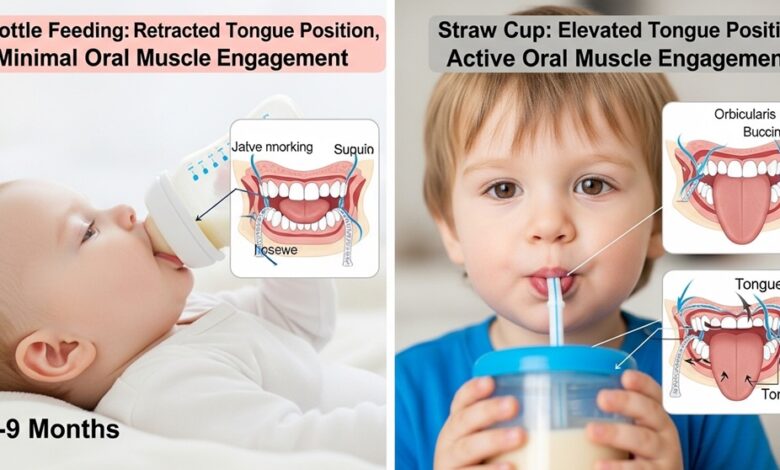
Short answer: Straw drinking strengthens lips, tongue, and cheek muscles in ways bottles and hard spouts do not.
Straw drinking promotes:
- Lip closure strength
- Tongue retraction and elevation
- Cheek stability
- Improved swallowing coordination
In contrast, prolonged bottle feeding encourages a forward tongue position. That pattern can interfere with speech sounds later.
Evidence From Clinical Practice
Speech-language pathologists frequently use straw drinking exercises in therapy to improve oral motor control. The same mechanics apply to infants learning to drink.
Research in pediatric feeding therapy shows children exposed to straw drinking before 12 months demonstrate stronger lip rounding and better swallow control compared to prolonged bottle users.
This is why many feeding therapists recommend skipping traditional hard-spout sippy cups and moving directly to straw or open cups.
What Type of Straw Cup Should You Choose?
Short answer: Choose a soft silicone straw, lightweight body, and spill-resistant valve.
Not all straw cups are equal. Some frustrate babies because suction is too strong. Others leak constantly.
Features That Matter
- Soft silicone straw
- Short straw length
- Easy-to-hold handles (optional)
- Minimal valve resistance
- Easy cleaning design
If you’re comparing budget-friendly options, this guide to
oral development friendly cups includes affordable picks designed for early training.
Should You Skip Hard Spout Cups?
Many pediatric feeding specialists recommend avoiding hard spouts. They can reinforce biting instead of sucking. Straw cups encourage a more mature swallowing pattern.
How Do You Teach Your Baby to Use a Straw Cup?
Short answer: Demonstrate, use the pipette method, offer small sips, and practice daily.
Step 1: Model the Action
Drink from a straw yourself. Exaggerate the motion. Babies learn through imitation.
Step 2: Try the Pipette Method
- Place straw in water.
- Cover top with your finger to trap liquid.
- Release small amount into baby’s mouth.
This teaches cause and effect. After a few repetitions, many babies attempt suction.
Step 3: Keep Practice Short
2–5 minutes. Once or twice daily. Stop before frustration builds.
Step 4: Use Water First
Water reduces pressure. If they spill, it’s easier to manage.
Step 5: Be Consistent for 2–4 Weeks
Most babies learn within 7–21 days. Consistency matters more than intensity.
What Common Problems Happen During the Transition?
Short answer: Chewing the straw, refusing the cup, or spilling are normal and temporary.
Problem 1: Baby Chews the Straw
Solution: Gently remove and reintroduce. Offer teething relief separately. Stay neutral.
Problem 2: Baby Refuses the Cup
Solution: Offer during calm times. Avoid forcing. Keep bottle feeds separate.
Problem 3: Spitting Water Out
Solution: This is sensory exploration. Reduce volume. Keep practicing.
Problem 4: Prefers Bottle Comfort
Solution: Gradually replace one feeding at a time rather than stopping abruptly.
How Long Does It Take for Babies to Fully Transition?
Short answer: Most babies adjust within 3–6 weeks.
| Week | Expected Progress |
|---|---|
| Week 1 | Exploring, chewing straw |
| Week 2 | Inconsistent suction |
| Week 3–4 | Independent sipping |
| Week 5–6 | Replacing bottle feeds gradually |
Case studies in pediatric clinics show earlier introduction correlates with smoother transitions. Babies introduced before 9 months often adapt faster than those introduced after 14 months.
Should You Eliminate the Bottle Immediately?
Short answer: No. Gradual reduction works better.
A sudden removal may increase stress. Instead:
- Replace daytime bottle first
- Keep bedtime bottle last
- Reduce one feeding every 5–7 days
The AAP recommends discontinuing bottle use by 12–18 months.
How Does This Affect Speech Development?
Short answer: Proper oral motor strength supports clearer speech patterns.
Straw drinking encourages:
- Stronger lip closure
- Improved tongue elevation
- Better airflow control
These skills influence early consonant sounds like “b,” “p,” and “m.” Pediatric feeding advice often overlaps with early speech therapy recommendations.
What Liquids Should You Use During Training?
Short answer: Start with water. Introduce milk once skill improves.
- Water for practice
- Breastmilk or formula if needed
- Whole milk after 12 months
Avoid juice during early training. It increases sugar exposure and dental risk.
How Can You Make the Transition Easier?
Short answer: Stay calm, stay consistent, and keep expectations realistic.
- Practice daily
- Celebrate small wins
- Avoid pressure
- Maintain routine
- Keep cup accessible during meals
Feeding transitions are developmental, not performance-based. Progress varies.
Conclusion: What Is the Smart Way to Transition to a Straw Cup?
Start early. Choose the right cup. Teach the skill intentionally. Stay consistent.
Transitioning to a straw cup supports oral development, strengthens feeding skills, and reduces long-term bottle dependence. Most resistance is temporary. Most babies adapt within weeks.
If you’re selecting your first training cup, review budget-friendly, development-focused options here:
pediatric feeding advice based recommendations.
Start today. Small steps now build stronger feeding skills later.
Frequently Asked Questions
1. Can a 6-month-old really use a straw?
Yes. With guidance, many 6-month-olds can learn straw suction using the pipette method.
2. Is a straw cup better than a sippy cup?
Straw cups often support stronger oral motor patterns compared to hard spout sippy cups.
3. What if my baby gags when using a straw?
Reduce liquid flow. Ensure upright posture. If gagging persists, consult a pediatrician.
4. How many times per day should I practice?
Once or twice daily for 2–5 minutes is sufficient during early training.
5. Can straw cups cause gas?
Minimal risk. Proper suction and upright positioning reduce air intake.
6. When should bottles be fully eliminated?
Most experts recommend stopping bottle use by 12–18 months.
7. Do straw cups prevent speech delays?
No cup guarantees prevention. However, proper oral muscle development supports clearer speech readiness.
Related Topic: The Role of Testing in Ensuring PCB Quality
Read Next: How to Apply the Health Triangle in Daily Self-Care Routines